Avoid hidden fees in Bromley rubbish collection quotes
Posted on 10/10/2026
If you have ever compared rubbish collection prices and felt that uneasy little pause before clicking "book", you are not alone. The headline price looks fine, then the extras start creeping in: labour charges, access fees, congestion surprises, minimum-load rules, and awkward wording that somehow only makes sense after the job is done. This guide explains how to avoid hidden fees in Bromley rubbish collection quotes, what to ask before you agree to anything, and how to read a quote like someone who has done this a few times before.
Truth be told, most bad experiences with waste removal do not start with a massive bill. They start with a quote that sounded cheap. That is the trap. In a busy place like Bromley, where homes, flats, offices, and garden clearances all bring slightly different access and loading challenges, a vague quote can cost you more than a transparent one. Let's make the process easier, calmer, and a lot less expensive than it needs to be.

Why Avoid hidden fees in Bromley rubbish collection quotes Matters
A rubbish collection quote should help you make a clear decision, not create a guessing game. The moment a price is unclear, you lose control over the budget and the timing. That matters whether you are clearing a flat in central Bromley, emptying a family home, or getting rid of builder's waste after a small renovation. The work itself may be straightforward, but the pricing often is not.
Hidden fees are especially frustrating because they tend to show up right when you are trying to get things sorted quickly. Maybe you are moving house, maybe the garden has got out of hand after a few wet weekends, or maybe you need a room cleared before new furniture arrives. In those moments, you do not want a complicated debate over why a van could not park close enough, or why a "light load" turned into a "restricted access" charge. You want a clear, fair number.
There is also a trust issue. A transparent quote says a lot about how a company works. If the pricing is clear from the start, the service is usually clearer too. If the pricing feels slippery, you may well end up chasing answers later. Nobody enjoys that. Not on a rainy Tuesday, and not after the bags are already outside.
In practical terms, avoiding hidden fees helps you:
- compare providers on a like-for-like basis
- stay within budget
- avoid arguments on collection day
- plan waste removal around your schedule
- understand what is actually included
That last point is the one people skip most often. And it is usually where the trouble starts.
How Avoid hidden fees in Bromley rubbish collection quotes Works
A proper rubbish collection quote is built from a few moving parts. The headline price may be based on volume, weight, labour, access, waste type, and whether the job needs special handling. The quote only becomes reliable when those parts are clearly explained in advance.
Here is the basic idea. A collection team estimates the amount of rubbish, the type of waste, and the effort needed to remove it safely. If you provide accurate details, the quote should reflect the real job. If you leave out a large wardrobe, a pile of rubble, or three flights of stairs in a Victorian conversion, the price may change later. Fair enough in some cases. But if the quote was vague from the start, that is another matter.
Good providers usually separate pricing into clear categories. For example:
- Volume or load size: how much space the waste takes up in the vehicle
- Weight or density: heavier waste can affect the handling cost
- Labour: whether items need to be carried from inside, upstairs, or across a distance
- Access: difficult parking, narrow paths, or long carries
- Waste type: general household items, garden waste, builders' rubble, office clearance items, or mixed loads
Sometimes the fee structure is simple. Sometimes it is not. The point is not to memorise every possible charge. The point is to know which questions uncover them before you say yes.
A useful way to think about a quote is this: if a provider cannot explain the cost in plain English, the quote is not really ready. That is not harsh. It is just sensible.
Key Benefits and Practical Advantages
When you know how to avoid hidden fees in Bromley rubbish collection quotes, the whole process becomes easier to manage. Not glamorous, perhaps, but easier. And in waste removal, easier is often better.
1. You protect your budget. This is the obvious one. Clear pricing helps you avoid being caught out by add-ons that were never mentioned on the initial call or form.
2. You can compare providers fairly. A quote that includes labour and access is not the same as a quote that leaves those details out. Once you know what is included, you can compare properly, not just chase the lowest number.
3. You reduce stress on the day. Nobody wants a truck arriving and then discovering the collection will cost more because the waste is upstairs. Clear quotes keep the conversation boring, in the best possible way.
4. You get better timing decisions. If a job needs two people instead of one, or extra time for difficult access, you can plan for it instead of improvising in the driveway while the kettle boils inside.
5. You build trust with the provider. Transparent pricing encourages transparent service. Simple as that.
There is a quieter advantage too: a proper quote helps you think more clearly about what really needs removing. Once the pricing is visible, you may decide to separate a garden clear-out from the builders' rubble, or wait until a second load is ready. That kind of decision can save money without much effort.
Who This Is For and When It Makes Sense
Not every rubbish collection job needs a deep pricing review, but many do. If you are dealing with more than a couple of bin bags, or anything bulky, messy, or awkward, it is worth checking the fine detail before booking.
This is especially relevant for:
- homeowners clearing lofts, garages, or spare rooms
- tenants moving out and needing a final clear-up
- landlords preparing a property between lets
- small businesses emptying offices or storage rooms
- households dealing with garden waste after a big tidy-up
- people with mixed waste that includes bulky or heavy items
- customers comparing rubbish collection against skip hire or self-load options
If your job is tiny and simple, a quote may be straightforward enough. But once stairs, parking, or mixed materials are involved, the risk of surprise charges rises. That is when being careful pays off.
It also makes sense if you are on a deadline. When time is tight, people are more likely to accept the first estimate they hear. That is understandable. Still, a five-minute check now can save a rather awkward call later. Nobody needs that sort of drama before lunch.
Step-by-Step Guidance
Here is a practical way to avoid hidden fees in Bromley rubbish collection quotes without turning the process into a research project.
1. Describe the waste as accurately as you can
List the item types, approximate quantity, and where they are located. If there are bulky items, damp waste, builders' debris, or mixed rubbish, say so. The more accurate you are, the less room there is for pricing surprises.
2. Ask what the quote actually includes
Do not just ask for a price. Ask what that price covers. Does it include loading, labour, disposal, VAT if applicable, and collection from inside the property? If the answer is vague, keep asking until it is clear. A good provider will not mind.
3. Check for access-related charges
This is a big one in residential areas. Ask whether parking distance, stairs, narrow access, or long carries could increase the cost. In Bromley, many properties have access quirks that do not show up in a quick phone estimate.
4. Confirm what happens if the load changes
Sometimes the pile grows after the quote. Maybe the garage had more in it than expected. Maybe the garden shed turned out to be full of broken bits from years ago. Ask how the price changes if the job is bigger or smaller than first described.
5. Ask about minimum charges
Some providers have a minimum collection size or minimum spend. That is not automatically bad, but you should know about it early. A small load can be perfectly reasonable, yet still cost more than you expected if the minimum applies.
6. Put the important points in writing
Even a brief email or text summary can help. A written quote gives you something to refer back to if there is confusion later. It is not about distrust. It is just sensible record-keeping.
7. Compare more than the headline price
Look at the total value: what is included, how clearly the job has been assessed, and how the provider communicates. The cheapest quote is not always the cheapest outcome. You know how it goes.
8. Decide before the team arrives
If possible, confirm the final scope before collection day. Decisions made under pressure often cost more. A little calm beforehand can save a lot of explaining later.
Expert Tips for Better Results
After enough waste quotes, one pattern becomes obvious: the people who ask careful questions usually get better outcomes. Not always cheaper, but better. And often cheaper in the end.
Be specific about awkward items. A sofa is not just a sofa if it has to come down two flights of stairs and round a tight landing. Likewise a bag of rubble is not the same as a bag of clothes. Waste firms price effort as well as volume.
Send photos if requested. A quick photo can reduce guesswork, especially for garden waste, loft clearances, and mixed household items. You do not need a perfect shot. Just enough to show the scale and access.
Ask whether the price is fixed or estimated. Fixed prices are usually easier to manage. Estimated quotes can be useful too, but only if you know what could change them.
Check whether the company separates labour from disposal. Some businesses quote for the collection only, then add handling or disposal costs later. That structure is not unusual, but it should be explained. Honestly, if it sounds awkward to ask, ask anyway.
Watch the language around "from" pricing. "Prices from" can be fine as a starting point, but not as the final figure if your job is more complex. The real question is: what pushes the price up, and by how much?
Keep an eye on timing. Same-day or short-notice collections may cost more. If your job is flexible by even a day or two, ask whether that changes the price.
Separate waste streams if you can. Mixed loads can be more expensive to sort and dispose of. If you can keep garden waste apart from general household rubbish, or builders' waste separate from furniture, the quote may become clearer.
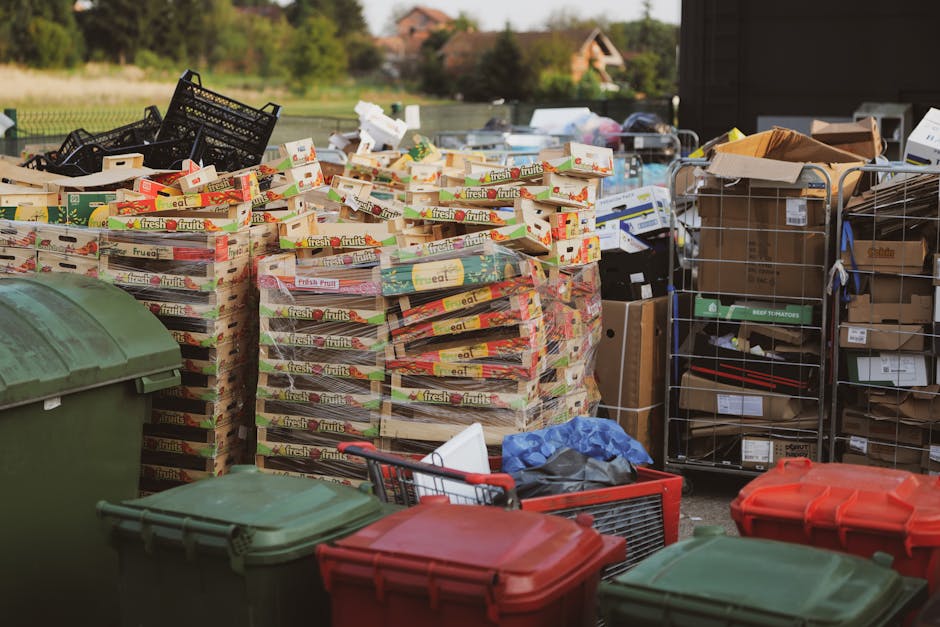
One small real-world observation: the tidiest quote requests are not always the ones with the neatest pictures. They are the ones where the customer explains what is actually there, even if it looks a bit untidy. That honesty saves time on both sides.
Common Mistakes to Avoid
Hidden fees often appear because of a misunderstanding that could have been prevented with one extra question. A few common mistakes come up again and again.
- Accepting a quote without asking what is included. This is the classic one. The price looks tidy, but the scope is fuzzy.
- Underestimating the amount of waste. A pile looks smaller from the kitchen window than it does in the driveway. Strange, but true.
- Ignoring access issues. Stairs, restricted parking, long walks from the road, or broken lifts can all affect the quote.
- Forgetting about heavy or specialist waste. Rubble, soil, old appliances, and mixed builder's debris may not be priced like light household rubbish.
- Not checking whether VAT or other charges are included. It sounds basic, but it still catches people out.
- Choosing a provider only because the price is lowest. If the quote is unusually low, ask why. Sometimes there is a harmless reason. Sometimes there is not.
- Leaving the final count until collection day. By then, you have less room to negotiate. And that is when everyone gets a bit rushed.
A fair warning here: if the provider seems irritated by reasonable questions, that is itself useful information. Better to know before the waste is on the pavement.
Tools, Resources and Recommendations
You do not need specialist software or a complicated checklist to get this right. A few simple tools are enough.
A basic item list
Write down what needs to go, how many items there are, and where they are. A note on your phone is fine. So is a scrap of paper stuck to the fridge.
Photos or a short video
Visuals are useful when the job includes bulky or mixed waste. They help the provider judge access and volume more accurately. Try to include the pathway to the pickup point if it matters.
A comparison note
When getting more than one quote, jot down the same details for each provider: what is included, any extras mentioned, whether the price is fixed, and when the collection can happen. That keeps comparison fair.
Supporting service pages
If you are planning a larger clearance or mixed disposal job, it can help to review related service information before asking for a quote. For example, you may want to look at rubbish collection in Bromley, waste removal options, or broader service details to understand what kind of job you actually need. For larger domestic clear-outs, house clearance in Bromley may be more appropriate; for outdoor waste, garden waste removal can be the better fit. And if your job involves renovation debris, the page on builders' waste disposal in Bromley is worth a look.
Pricing guidance
To understand how a quote is structured, review the company's pricing and quotes information carefully. That is where the small print should be made a bit less mysterious, ideally.
Company information and trust signals
It also helps to review the provider's about page, plus practical pages such as insurance and safety and payment and security. These pages do not replace a proper quote, of course, but they can tell you how carefully the business handles real customer concerns.
Law, Compliance, Standards and Best Practice
When rubbish is collected, the details are not just commercial. They can also involve responsible handling, safe transport, and proper disposal. You do not need to become an expert in waste law to ask good questions, but a bit of awareness helps.
As a customer, the sensible best practice is to use a provider that can explain how waste is handled, where possible, and how pricing relates to the service delivered. If a company offers unusually vague wording around disposal, or seems unwilling to explain what happens after collection, that is a warning sign. Nothing dramatic. Just a nudge to keep looking.
For your own peace of mind, it is reasonable to ask about:
- how different waste types are separated
- how safety is managed during loading
- whether items are handled in a way that supports recycling where appropriate
- what happens if hazardous or restricted materials are discovered
Some items may need special handling, and some loads may be refused or re-priced if they contain materials not covered in the original quote. That is standard enough. What matters is that it is explained before collection, not after. A good provider should make that clear in plain language.
You should also expect reasonable transparency around payments, terms, and the conditions of service. If the quote references terms and conditions, take a few minutes to read them. Not glamorous, admittedly, but worth it. That bit of boring admin can save you from a surprisingly long phone call later.
Options, Methods, and Comparison Table
People often compare rubbish collection with skip hire or a DIY trip to the tip. Each route has its place, but the best choice depends on the job, the access, and how much you want to do yourself.
| Option | Best for | Possible hidden-cost risks | What to check |
|---|---|---|---|
| Rubbish collection | Quick clearances, bulky items, mixed household waste | Access fees, labour charges, minimum loads | What is included, whether loading is covered, how access affects price |
| Skip hire | Longer projects, DIY, ongoing fill over several days | Permit costs, overfilling, extra hire days | Permit need, placement, size, collection timing |
| Self-load disposal | Small loads and people with transport | Fuel, time, disposal limits, sorting effort | Vehicle capacity, site opening hours, waste acceptance rules |
If you want the simplest experience, collection often wins. If you want to fill at your own pace, skip hire may suit you better. If the load is small and easy to move, self-load can make sense. The trick is not to choose the cheapest option on paper, but the one that stays cheapest once the real details are included.
For households or landlords comparing broader property-related decisions in the borough, local reading such as the local guide to living in Bromley or the property transactions guide can provide extra context on how services fit around day-to-day life and moves. It is not essential, but it can help you plan with a bit more confidence.
Case Study or Real-World Example
Here is a realistic example. A homeowner in Bromley needs a garage cleared before a new car can go in. At first glance, it looks like a straightforward load: old shelving, a broken bike, a couple of small appliances, and a pile of mixed bags. The first quote sounds attractive because it is low and quick.
But then the questions start. The garage is at the back of the property, the drive is narrow, and the waste includes a few heavier items than expected. One provider mentions a possible access surcharge if the team cannot park close enough. Another says the price includes loading from the garage but not dismantling the shelving. A third gives a clear fixed price after seeing photos and confirming that the bike and appliances are already separated.
Which quote is really the cheapest? Probably the one that explains the job properly. The low headline price may have looked nice for about thirty seconds, until the extras arrived. After that, not so much.
What made the difference in this example was simple: the homeowner gave more detail before booking. That meant fewer surprises, faster collection, and a bill that matched the expectation. No drama. No shrugging at the doorstep. Just done.
A similar pattern shows up in garden clearances too. If a job includes bags of soil, branches, old fence panels, and a rusted bench, a vague estimate can wobble very quickly. The more openly the job is described, the more accurate the quote tends to be. It really is that straightforward, even if the industry language sometimes tries to be clever about it.
Practical Checklist
Use this checklist before you accept any rubbish collection quote in Bromley.
- Have I described all the waste items clearly?
- Have I included photos if the job is bulky or awkward?
- Do I know whether the price includes loading and labour?
- Have I checked for access, parking, stairs, or long-carry charges?
- Do I know whether the quote is fixed or estimated?
- Are VAT and disposal costs included?
- Have I asked about minimum charges or minimum load sizes?
- Do I know what happens if the amount of waste changes?
- Have I compared more than one provider?
- Have I read the terms and conditions before agreeing?
If you can tick most of those off, you are in a much stronger position. Not perfect maybe, but strong enough to avoid the most common surprises.
Key takeaway: the best way to avoid hidden fees in Bromley rubbish collection quotes is to make the job visible before the quote is confirmed. Clear details lead to clearer pricing. It's boring, yes. Also effective.
Conclusion
Hidden fees are rarely hidden forever. They usually show up as soon as the job gets more complicated than the first estimate suggested. That is why a little care at the quote stage matters so much. If you describe the waste properly, ask what is included, and check the awkward details before booking, you greatly reduce the risk of an unpleasant surprise.
In Bromley, where properties and access conditions vary quite a bit, that extra attention is worth it. A good rubbish collection service should help you feel informed, not cornered. And if the quote is clear, the rest of the process tends to feel easier from the first phone call to the final sweep-up.
Get a free quote today and see how much you can save.
Take your time, ask the awkward question, and trust the providers who answer plainly. That usually tells you enough.

 Tipper Van - Rubbish Collection and Junk Removal Prices in Bromley, BR1
 Luton Van - Rubbish Collection and Junk Removal Prices in Bromley, BR1